13119157289@163.com
13119157289
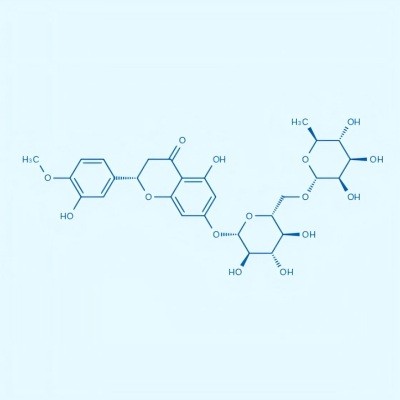
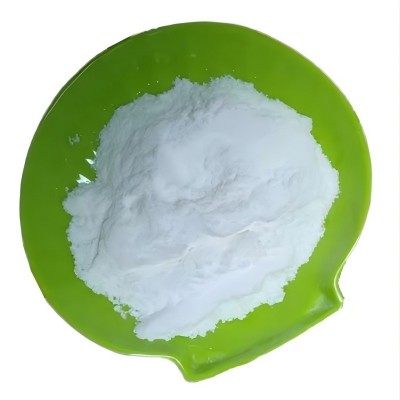
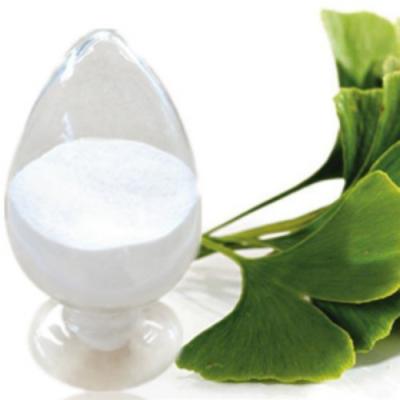
Hesperidin (CAS: 520-26-3), with the molecular formula C₂₇H₃₀O₁₆ and a molecular weight of 610.52, is a natural dihydroflavone compound mainly existing in the peel of citrus plants. It appears as pale yellow crystalline powder, sparingly soluble in water, soluble in methanol, ethanol and other organic solvents, requiring sealed, light-proof and dry storage. With antioxidant, vascular-protective and anti-inflammatory effects, it can enhance capillary toughness, widely used in food additives, dietary supplements, cosmetics and pharmaceutical intermediates, safe and mild.
Hesperidin (CAS: 520-26-3), chemically named 5,7,3'-Trihydroxy-4'-methoxyflavanone-7-rutinoside, has the chemical formula C₂₇H₃₀O₁₆ and a molecular weight of 610.52. It is a naturally occurring dihydroflavone compound, mainly derived from plants of the genus Citrus in the Rutaceae family, such as the peel, pulp and juice of oranges, grapefruits and citrus. Among them, the peel has the highest content, making it one of the most representative active nutrients in citrus fruits. As an important member of natural flavonoids, Hesperidin has both natural safety and diverse biological activities. Although it has poor water solubility, it is widely used in food additives, dietary supplements, cosmetics and pharmaceutical intermediates due to its prominent effects such as antioxidant, vascular protection and anti-inflammatory, making it a natural functional raw material with both nutritional and application value, occupying an important position in the big health and chemical industries.
In terms of physical and chemical properties, Hesperidin appears as pale yellow crystalline powder or needle-like crystals, odorless, tasteless and non-irritating, with stable overall physical and chemical properties. Its melting point is about 258-262℃, and its specific rotation is -76° (c=2, pyridine). Its solubility has obvious characteristics: it is sparingly soluble in cold water, slightly soluble in hot water, and easily soluble in organic solvents such as methanol, ethanol, acetone and pyridine. It can dissolve in alkaline solutions and show yellow color. This solubility feature requires solvent compounding, microencapsulation and other formulation technologies to improve its water solubility and application adaptability in product processing. Hesperidin has a certain tolerance to strong light and high temperature, and can be stored stably in a normal temperature and dry environment. However, long-term exposure to strong light, high temperature or high humidity is prone to oxidative inactivation. Therefore, it must be stored in sealed, light-proof and dry conditions to avoid moisture absorption, caking or component degradation, ensuring the purity and activity stability of the product. At the same time, it should be stored separately from oxidants to prevent chemical reactions.
In terms of production process, Hesperidin is mainly prepared from citrus peel as raw material by green and environmentally friendly extraction and purification processes. At present, the mainstream processes include solvent extraction, ultrasonic-assisted extraction, microwave-assisted extraction and enzymatic extraction. Among them, ultrasonic-assisted extraction has become the preferred industrial production process due to its high extraction efficiency, short time consumption, low energy consumption and no damage to active ingredients. The production process mainly includes precision steps such as raw material pretreatment, extraction, filtration, concentration, purification, crystallization, drying and packaging. After cleaning and crushing, the raw materials are extracted with organic solvents such as ethanol, and then impurities are removed by column chromatography, recrystallization and other methods to improve product purity. In industrial production, high-purity Hesperidin can be stably produced with a purity of more than 98% and impurity content controlled below 2%, meeting the relevant industry standards of food grade, cosmetic grade and pharmaceutical grade, and can meet the large-scale application needs of different fields. There are various packaging specifications, suitable for laboratory research and industrial production.
The core value of Hesperidin lies in its diverse and mild biological activities. Verified by a large number of experiments, it is extremely safe with no obvious toxic and side effects, suitable for long-term use, and has been approved as a food additive and dietary supplement raw material in many countries and regions. Its core functions are concentrated in antioxidant, vascular protection, anti-inflammatory, skin care and other aspects: as a natural antioxidant, Hesperidin can efficiently scavenge excess free radicals in the body, inhibit lipid peroxidation, reduce the damage of free radicals to cells, delay body aging and skin aging. Its antioxidant capacity is better than that of vitamin C, and it is mild and non-irritating, suitable for all groups of people.
In terms of vascular protection, Hesperidin is a high-quality vascular protectant, which can enhance capillary toughness, reduce capillary permeability, improve microcirculation disorders, reduce tissue edema and congestion, and has a positive effect on fragile capillaries, varicose veins, and auxiliary improvement of hypertension, especially suitable for middle-aged and elderly people; in terms of anti-inflammatory, it can inhibit the release of inflammatory factors, relieve inflammatory reactions, and has a certain auxiliary improvement effect on skin inflammation and mild gastrointestinal inflammation; in the field of skin care, it can repair the skin barrier, soothe skin sensitivity, improve dry and rough skin, and at the same time inhibit melanin production, brighten skin tone, and is widely used in high-end skin care products. In addition, Hesperidin also has effects such as auxiliary lipid-lowering and liver protection, further expanding its application scenarios.
In terms of application scenarios, Hesperidin is widely used in four major fields: food, health products, cosmetics and medicine. In the food field, as a natural food additive, it is used for antioxidant, preservation and flavor regulation, suitable for the production of various foods such as fruit juices, pastries, beverages and health products; in the field of dietary supplements, it can be made into tablets and capsules alone, or combined with other flavonoids and vitamins to make compound supplements, focusing on antioxidant and vascular protection effects, suitable for middle-aged and elderly people and people with fragile capillaries; in the field of cosmetics, as an active raw material, it is applied to toners, essences, face creams, masks and other products, focusing on anti-aging, brightening and soothing; in the pharmaceutical field, as a pharmaceutical intermediate, it is used for the R&D of anti-inflammatory and vascular protection drugs to assist in improving the symptoms of related diseases.
With the popularization of natural health concepts and the increasing demand for functional raw materials from consumers, the market demand for Hesperidin continues to rise due to its natural origin, safety, mildness and clear efficacy. In the future, with the continuous optimization of production processes, its water solubility will be further improved, its application scenarios will be continuously expanded, and more pharmacological effects will be further explored, making it play a greater role in the food, big health and cosmetic fields, and become one of the core products in the field of natural functional raw materials.
Contact: Jessie
Phone: 13119157289
Tel: 13119157289
Email: 13119157289@163.com
Add: Room 403,Building 8,West Life Science and Technology Park,Keyuan 4th Road,Xixian New District,Xi'an City,Shaanxi Province
We chat