13119157289@163.com
13119157289
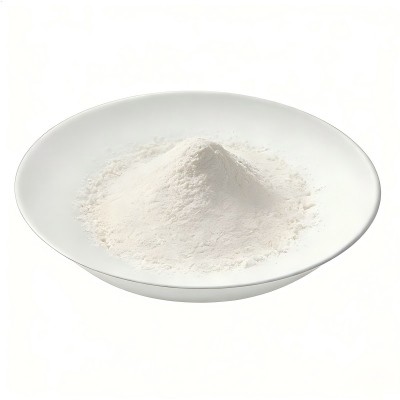
Xanthan gum (CAS: 11138-66-2) is a natural high-molecular-weight polysaccharide, appearing as white or pale yellow powder with no odor or taste. It is easily soluble in water, with strong stability, resistance to acid, alkali and high temperature. It has excellent thickening, emulsifying and stabilizing effects, widely used in food, medicine, daily chemicals and petroleum industries, and is a safe and practical functional additive.
Xanthan gum (CAS: 11138-66-2), with the chemical formula (C35H49O29)n, is a natural high-molecular-weight polysaccharide produced by the fermentation of Xanthomonas campestris. It is one of the most widely used and comprehensive functional food additives and industrial raw materials in the industrial field. Appearing as white or pale yellow fine powder, it is odorless, tasteless, and has good fluidity. It is easily soluble in both cold and hot water, and forms a uniform, viscous aqueous solution after dissolution. With excellent thickening, emulsifying, stabilizing, suspending, acid-resistant, alkali-resistant and high-temperature-resistant properties, as well as high safety and strong compatibility, it is widely used in food, medicine, daily chemicals, petroleum, textile, environmental protection and many other industries, becoming an indispensable core raw material in industrial production and daily life.
In terms of the core characteristics of the product, the advantages of xanthan gum are concentrated in its unique physical and chemical properties and functional diversity. Firstly, its thickening performance is outstanding. A very low addition amount (usually 0.1%-1.0%) can achieve a significant thickening effect, enabling the aqueous solution to form a high-viscosity, pseudoplastic colloid system. The thickening effect is not affected by temperature, pH value, or electrolyte concentration, and can maintain stable viscosity in acidic, alkaline, and high-salt environments. This characteristic makes it highly adaptable in various foods, beverages, and industrial products. Secondly, xanthan gum has excellent emulsifying and stabilizing effects. It can effectively reduce the oil-water interfacial tension, combine the oil phase and water phase to form a stable emulsification system, prevent stratification and precipitation, and extend the product shelf life. It is especially suitable for products that require long-term stability, such as dairy products, beverages, and condiments. In addition, xanthan gum also has good suspension performance, which can make insoluble solid particles evenly dispersed in the system, avoid precipitation and caking. At the same time, its pseudoplastic characteristic makes its viscosity decrease during stirring and recover when standing, which is convenient for production, processing and use.
In terms of production process, xanthan gum is prepared by biological fermentation. Using carbohydrates such as corn starch and glucose as raw materials, it is made through a series of processes including deep fermentation, extraction, purification, and drying of Xanthomonas campestris. The production process is green and environmentally friendly, without the production of toxic and harmful substances, which conforms to the development concept of modern green chemical industry and food industry. At present, the production process of xanthan gum has reached a high degree of maturity, with product purity reaching more than 99%, extremely low impurity content, which meets the usage standards of different fields such as food grade, pharmaceutical grade, and industrial grade. Moreover, the production efficiency is high and the cost is controllable, which can meet the needs of large-scale industrial production. At the same time, during the production process, the viscosity, molecular weight and other indicators of the product can be optimized by adjusting the process parameters to adapt to the specific usage needs of different industries, further expanding its application scope.
In terms of application scenarios, xanthan gum is widely used in many industrial fields and plays an irreplaceable role in each field. In the food industry, xanthan gum is one of the most commonly used functional additives, widely used in beverages, dairy products, meat products, condiments, pastries, quick-frozen foods and other products. In the beverage industry, it can be used as a thickener and stabilizer to improve the taste and texture of beverages, prevent pulp precipitation and stratification, and enhance the stability and drinking experience of beverages, especially suitable for products such as fruit juices, milk beverages, and plant protein beverages. In the dairy industry, it can increase the viscosity of products such as yogurt, ice cream, and cheese, improve the taste, prevent ice crystal formation and stratification, and extend the product shelf life. In the meat product industry, xanthan gum can be used as a water-retaining agent and binder to improve the elasticity, tenderness and water retention of meat products, reduce water loss during processing, and improve product quality. In the condiment industry, it can increase the viscosity of sauces and soups, enhance the flavor layering, prevent sauce stratification and precipitation, and facilitate storage and use.
In the pharmaceutical field, relying on its good biocompatibility and safety, xanthan gum is often used as a pharmaceutical excipient, mainly for thickening, stabilizing and suspending pharmaceutical preparations, and improving the stability and bioavailability of drugs. For example, in oral liquids and syrups, xanthan gum can be used as a thickener to improve the taste and fluidity of the preparation and prevent the precipitation of drug components. In ointments and gels, it can be used as a matrix to increase the viscosity and stability of the preparation, facilitate smearing and absorption. In addition, xanthan gum can also be used to prepare sustained-release pharmaceutical preparations, control the release rate of drugs, extend the action time of drugs, and improve the therapeutic effect. At the same time, its non-toxic and non-irritating characteristics ensure the safety of pharmaceutical preparations.
In the daily chemical and cosmetic fields, xanthan gum can be used as a thickener, stabilizer and emulsifier, widely used in shampoos, body washes, face creams, lotions and other products. It can increase the viscosity of daily chemical products, improve the use feel of products, prevent product stratification and precipitation, and at the same time enhance the moisturizing performance of products, form a protective film on the skin surface, lock in moisture, improve dry skin conditions, and enhance the use experience of products. In addition, xanthan gum also has good compatibility, which can work synergistically with other daily chemical raw materials to further optimize product performance and meet the needs of different consumers.
In the industrial field, xanthan gum is also widely used. In the oil exploitation industry, it can be used as a drilling fluid additive to increase the viscosity and stability of drilling fluid, carry cuttings, prevent wellbore collapse, and improve drilling efficiency and safety. In the textile industry, it can be used as a sizing agent to improve the strength and flexibility of yarn, reduce the breakage rate during textile processing, and improve the quality of fabrics. In the environmental protection field, xanthan gum can be used as a water treatment agent for wastewater treatment. Through its viscosity and adsorption, it can adsorb suspended impurities and heavy metal ions in water and purify water quality. In the coating industry, it can be used as a thickener and stabilizer to improve the rheology of coatings, prevent coating stratification and precipitation, and enhance the construction performance and decorative effect of coatings.
In terms of product safety, xanthan gum has been approved as a food additive and industrial raw material in many countries and regions. After long-term toxicological tests and practical application verification, it is non-toxic, non-irritating, and will not cause harm to the human body and the environment, which meets the safety standards of food, medicine, daily chemical and other industries. At the same time, xanthan gum is not easily digested and absorbed by the human body, does not participate in human metabolism, and will not cause blood sugar to rise, so it is suitable for all types of people to eat, including special groups such as diabetics and infants. Its stable chemical properties make it not easy to deteriorate during storage and transportation. It only needs to be stored in a sealed, light-proof and dry place, which reduces the use cost and risk.
With the continuous development of related industries, the application scope of xanthan gum is still expanding. Its excellent functional characteristics and wide adaptability make it one of the core products in the fine chemical industry. Whether it is improving product quality in the food industry, or helping product research and development and production in the pharmaceutical, daily chemical and industrial fields, xanthan gum provides strong support for the development of various industries with its unique advantages. The market demand continues to grow steadily, and the application prospect is very broad.
Contact: Jessie
Phone: 13119157289
Tel: 13119157289
Email: 13119157289@163.com
Add: Room 403,Building 8,West Life Science and Technology Park,Keyuan 4th Road,Xixian New District,Xi'an City,Shaanxi Province
We chat